

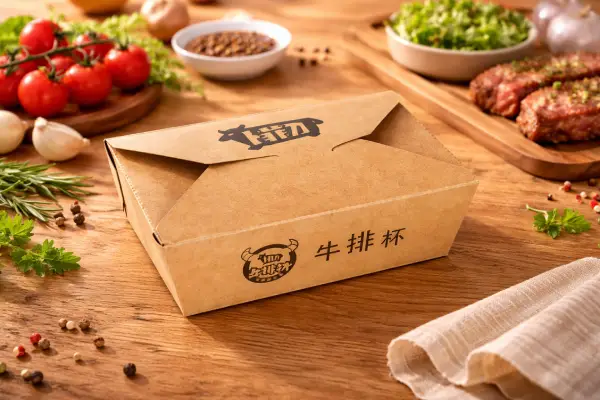
Picture two booths at a natural products trade show, both selling the same organic soap at the same price. One displays it in polished white boxes with bold color printing. The other uses kraft brown paper boxes with a simple black stamp logo. The kraft booth attracts a different type of buyer — not because the product is better, but because the packaging tells a story the white boxes can’t.
Buyers at natural product trade shows often connect kraft packaging with authentic ingredient sourcing before they’ve read a single label. That reaction isn’t random. Over 60% of consumers say they actively look for natural-looking packaging materials when shopping for personal care and wellness products, making kraft packaging a direct purchasing signal for artisan and organic brands.
This guide covers what kraft brown paper boxes actually communicate to customers, when kraft outperforms white stock, and when it works against you.
What Kraft Brown Paper Boxes Actually Communicate
Kraft packaging sends a set of subconscious signals before a customer reads a single word on the box: natural ingredients and sourcing, handmade or small-batch production, environmental responsibility, authenticity and transparency, and a sense of being less commercial and more personal. These associations form automatically, largely because unbleached brown material feels less manufactured than white stock — the texture itself reads as raw and untouched, which customers translate into assumptions about what’s inside.
This works especially well for specific product categories. Artisan food products, handmade soap and skincare, organic supplements, natural candles, botanical products, farmers market businesses, and CBD and hemp products all benefit from the natural-sourcing signal kraft sends before purchase.
Kraft doesn’t work everywhere, though. Clinical or medical products need a different signal entirely — one of precision and sterility, which kraft actively undermines. Luxury spa brands with premium pricing often need a more polished material to justify their price point. Brands built around bright, bold graphics lose most of their visual impact on kraft’s muted surface. And any brand where color accuracy is the primary design requirement should default to white stock, since kraft simply can’t reproduce color the same way.
Kraft vs White Packaging Honest Comparison
Print quality is where kraft and white stock diverge most. Kraft absorbs ink differently than white stock, so colors appear warmer and slightly muted rather than true to their digital proof. Bright colors lose vibrancy on kraft, and white ink becomes necessary for any light elements to stand out against the brown base. Fine detail is also harder to reproduce on kraft’s naturally textured surface. White stock, by comparison, offers full color accuracy, sharp fine-line printing, and reliable photographic reproduction — real advantages if your brand depends on precise color matching.
Photography performance follows a similar split. Kraft photographs best against wooden surfaces, stone textures, linen and cotton backgrounds, and natural window light — the kind of styling common in artisan and farmers market product photography. White stock photographs best against white marble, neutral backdrops, and studio lighting. The real question worth asking is which of these photography styles actually matches your brand’s Instagram aesthetic, since that’s often where customers see the packaging before they see the product in person.
On cost, kraft isn’t automatically cheaper or more expensive — pricing depends on material grade, print complexity, production quantity, and finishing options. Where costs do diverge: white ink printed on kraft adds expense, and heavy color coverage increases cost regardless of base material. At higher production volumes, the price difference between kraft and white stock tends to narrow considerably.
Case study: A Portland-based organic body butter brand switched from white folding cartons to FSC-certified kraft boxes with black logo stamping. Within 60 days, three boutique natural food stores requested the product specifically, citing that the packaging fit their store aesthetic. The formula had not changed.
Types of Kraft Brown Paper Packaging Available
Kraft folding cartons are the standard retail packaging format in kraft stock, well suited to soap, candles, food products, and wellness supplements. They typically support one to four color printing and represent the most common entry point for artisan brands moving from generic packaging into custom kraft.
Kraft mailer boxes use corrugated kraft built for ecommerce shipping, and they’ve become the dominant format for Etsy sellers, DTC brands, and subscription services. The combination of real shipping protection and a natural brand aesthetic is exactly why this format has taken over in artisan ecommerce.
Kraft sleeve packaging offers a minimal wrap suited to bar-format products like soap bars, chocolate bars, and other artisan food items. Because they use the least material per unit of any kraft format, sleeves are typically the most sustainable packaging option available for these products.
Kraft tuck-end boxes provide a reliable, simple closure structure used across multiple product categories at retail. Their fast assembly time makes them a practical choice for growing businesses scaling up from handmade production to small-batch manufacturing.
Kraft gift boxes offer a more elevated presentation while keeping the natural tone, suited to artisan gift sets, holiday packaging, and farmers market bundles. Paired with natural ribbon and minimal tissue, kraft gift boxes tend to photograph especially well for social and marketplace listings.
Printing on Kraft — What Works and What Doesn’t
Certain colors work reliably on kraft. Black offers the strongest contrast and is nearly always the safest choice for logos and text. White ink creates clean, legible highlights against the brown background where needed. Dark greens complement kraft’s natural tone, as do deep browns and tan shades. Muted gold pairs especially well with kraft for brands leaning into an artisan aesthetic.
Other colors lose their impact entirely. Bright blues look washed out against kraft’s warm base. Vivid pinks lose most of their saturation. Electric orange tends to read as muddy rather than vibrant. Neon tones are essentially ineffective on kraft stock and should be avoided outright.
Certain finishes pair especially well with kraft. Matte lamination protects the box while preserving its natural feel. Spot UV applied to a logo creates contrast without altering the material’s character. Foil stamping in gold or copper is arguably the most effective premium finish available on kraft, since the contrast between metallic foil and matte brown paper is immediately eye-catching. Embossing is particularly effective on kraft too, because the material’s existing texture makes raised elements feel more natural than they would on smooth white stock.
Packaging quality also has a measurable effect on repeat business: studies show 52% of consumers say they are more likely to repeat purchase from a brand that delivers products in attractive, well-considered packaging, and kraft consistently outperforms generic stock on this metric among artisan and organic buyers.
Case study: A Nashville-based natural candle brand tested two packaging options side by side — white folding cartons with green printing versus kraft boxes with copper foil logo stamping. The kraft version sold 40% faster at the same specialty retail location over the same 30-day period. The candle formula and price were identical across both formats.
FSC-Certified Kraft — Why Certification Matters
FSC certification confirms that the kraft material comes from responsibly managed forests, verified through an independent chain-of-custody process rather than a supplier’s own claim. To verify FSC claims, ask your supplier for their certificate number and confirm it against the Forest Stewardship Council’s public database rather than taking a logo on a proof at face value.
FSC certification matters most in three situations: when a brand’s core positioning is eco-conscious, when retail buyers are actively asking about sourcing before stocking a product, and when the customer base is sustainability-focused enough to check for the mark themselves. Displaying the FSC mark correctly requires using the certified logo format tied to your supplier’s specific license, not a generic version pulled from the internet.
It’s also worth understanding the difference between FSC-certified kraft and recycled kraft content — the two aren’t the same claim, and some brands intentionally use both, pairing certified virgin fiber with a recycled content statement to cover both sourcing and circularity messaging.
Kraft Box Buyers
What are kraft brown paper boxes made from? Kraft boxes are made from kraft paper or kraft paperboard, a material produced from wood pulp using a specific chemical pulping process that leaves the natural brown color intact rather than bleaching it white. This process also gives kraft its characteristic strength relative to standard cardboard.
Are kraft boxes eco-friendly? Kraft boxes are generally considered eco-friendly, particularly when sourced from FSC-certified or recycled material. The unbleached production process also uses fewer chemicals than bleached white paperboard, which adds to their sustainability profile.
What colors print well on kraft? Black and dark tones print most reliably on kraft, along with white ink for highlights and muted gold for premium accents. Bright, saturated colors like blue, pink, and orange tend to lose vibrancy against the brown base.
What is the minimum order for custom kraft boxes? The typical minimum order is 25 boxes. This low minimum makes custom kraft packaging realistic for small and early-stage artisan brands, not just larger companies ordering at scale.
How long does production take for kraft packaging? Standard production takes around 7 business days after artwork approval. Specialty finishes like foil stamping or embossing can extend that timeline, so it’s worth confirming lead times before a launch date.
Kraft Brown Paper Boxes: Complete Reference
Kraft brown paper boxes are packaging made from unbleached kraft paperboard, prized for the natural, sustainable, and artisan associations they create before a customer reads any product information. They communicate signals of authentic sourcing, small-batch production, and environmental responsibility largely because their unbleached, textured surface feels less manufactured than white stock, making them a strong fit for artisan food, handmade skincare, organic supplements, candles, and botanical products, though a weaker fit for clinical, luxury, or bold-graphic brands that depend on precise color reproduction.
Several kraft packaging formats suit different needs. Kraft folding cartons work well for soap, candles, and wellness supplements as a standard retail format. Kraft mailer boxes combine corrugated shipping protection with natural branding for ecommerce sellers. Kraft sleeve packaging offers a minimal, highly sustainable wrap for bar-format products like soap and chocolate. Kraft tuck-end boxes provide fast, reliable assembly for growing retail brands, while kraft gift boxes offer an elevated presentation for gift sets and seasonal bundles.
Printing on kraft favors black, white ink, dark green, deep brown, and muted gold, all of which read clearly against the material’s warm base, while bright and neon colors lose saturation and should generally be avoided. Finishes such as matte lamination, spot UV, foil stamping, and embossing all pair especially well with kraft, since the material’s natural texture enhances rather than competes with these treatments.
Ordering kraft packaging typically starts at a minimum order of 25 boxes, with standard production taking about 7 business days after artwork approval. FSC certification is worth confirming directly with a supplier when sourcing claims matter to your brand or your retail buyers, since it verifies that the material comes from responsibly managed forests through an independent certification process.
Where This Leaves You
Kraft is a strategic choice, not a default. It works when your brand story, product type, and customer base genuinely align with a natural aesthetic — artisan food, handmade skincare, organic supplements, and similar categories all benefit directly. It works against you when color accuracy, clinical positioning, or bold graphic branding matter more than natural texture.
If you’re ordering kraft packaging for the first time, start with a folding carton or mailer box in black ink, since that combination is the safest entry point on both cost and print reliability. Explore our custom kraft boxes in sleeve, mailer, folding carton, and display formats for artisan and sustainable brands across the United States.
FAQ
What are kraft brown paper boxes? Kraft brown paper boxes are packaging made from kraft paperboard, a material produced from wood pulp through a process that preserves its natural brown color rather than bleaching it white. They’re widely used across artisan, organic, and sustainability-focused brands because the unbleached texture reads as more natural and less manufactured than white stock. Kraft is available in several structural formats, including folding cartons, mailer boxes, sleeves, and gift boxes. Most brands choose kraft specifically for the sourcing and authenticity signal it sends before a customer reads any label.
What makes kraft more sustainable than standard cardboard? Kraft paperboard generally requires fewer chemicals to produce than bleached white cardboard, since it skips the bleaching process entirely and keeps the paper’s natural color. Many kraft suppliers also offer FSC-certified material, which verifies the wood pulp comes from responsibly managed forests. Recycled kraft content is another common option, reducing reliance on new wood pulp altogether. Together, these factors are why kraft is frequently the default recommendation for brands prioritizing sustainable packaging.
What products work best in kraft boxes? Kraft performs best for artisan food products, handmade soap and skincare, organic supplements, natural candles, botanical products, and CBD or hemp products. These categories all benefit from the natural-sourcing association kraft creates automatically, often before a customer has read the ingredient list. Products where clinical trust, luxury polish, or precise color accuracy matter more than natural texture tend to perform worse in kraft. The right fit ultimately depends on whether your brand story and product category align with kraft’s natural, less-commercial signal.
What colors print well on kraft? Black prints most reliably on kraft and offers the strongest contrast against the brown base. White ink is commonly used to create clean highlights, while dark green, deep brown, and muted gold all complement kraft’s natural tone. Bright and saturated colors like blue, pink, and orange lose vibrancy and can appear muddy on kraft’s textured surface. Brands that depend on exact, vibrant color reproduction are usually better served by white stock instead.
Can I get my logo on kraft boxes? Yes, logos print well on kraft, particularly in black, white ink, or foil stamping. Foil stamping in gold or copper is one of the most effective ways to make a logo stand out on kraft, since the metallic contrast against matte brown paper is immediately visible. Embossing is another strong option, since kraft’s existing texture makes raised logo elements feel more natural than they would on smooth white stock. Most suppliers can produce a sample proof so you can see exactly how your logo will look before committing to a full production run.
Are kraft boxes recyclable? Yes, kraft boxes are typically recyclable, particularly uncoated kraft used for folding cartons and sleeves. Some finishing options, like certain laminates or heavy foil coverage, can affect recyclability depending on local recycling processing capabilities. FSC-certified and recycled-content kraft options are widely available for brands that want to strengthen their sustainability claims beyond basic recyclability. Checking with your specific supplier on finishing choices is worth doing if recyclability is a core part of your brand messaging.
What is FSC certification? FSC certification is issued by the Forest Stewardship Council to confirm that paper and wood-based materials come from responsibly managed forests, tracked through an independent chain-of-custody process. It’s a stronger claim than “eco-friendly” or “sustainable” language alone, since it’s backed by third-party verification rather than a supplier’s own description. Brands can verify a supplier’s FSC claim by checking their certificate number against the Forest Stewardship Council’s public database. FSC certification matters most for brands with an eco-conscious positioning or retail buyers who specifically ask about sourcing.
How do I choose the right kraft box size? Box size should be based on your product’s actual dimensions plus enough room for any inserts needed to prevent movement during shipping or handling. Oversized boxes waste material and increase shipping costs, while undersized boxes risk product damage or a cramped, low-quality appearance. Most suppliers can help calculate the right dimensions once you provide your product’s measurements and any packaging inserts you’re planning to use. Ordering a sample in your intended size before a full production run is the most reliable way to confirm the fit works in practice.
What is the minimum order quantity? The typical minimum order quantity for custom kraft boxes is 25 units. This relatively low minimum makes custom kraft packaging accessible to small and early-stage artisan brands, not just companies ordering at large scale. Per-unit pricing generally decreases as order volume increases, so many brands scale up their order size once a product has proven it sells. It’s worth confirming the exact minimum with your supplier, since it can vary slightly by box format and finish.
How long does production take? Standard kraft packaging production takes around 7 business days after final artwork approval. Specialty finishes such as foil stamping, embossing, or heavy color coverage can extend that timeline beyond the standard window. Brands planning a product launch should build in extra time for sampling and any revisions before the production clock even starts. Confirming a firm timeline directly with your supplier early on helps avoid delays close to a launch date.