

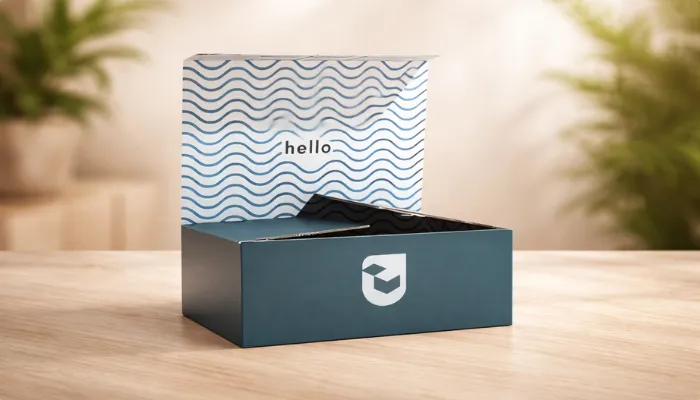
Display boxes for retail are custom-designed packaging structures used to showcase products at the point of sale — on store shelves, checkout counters, end caps, or freestanding floor positions. They are engineered to maximize product visibility, encourage impulse purchases, and communicate brand identity at the exact moment a buying decision is made. Display boxes differ from standard shipping or storage packaging in one critical way: their primary job is not to protect the product in transit but to sell it in the retail environment.
According to POPAI (the Point of Purchase Advertising International), 76% of all purchase decisions in US retail stores are made at the point of sale. That means more than three quarters of buying decisions happen right in front of the shelf, the counter, or the display. For brands competing in physical retail, the display box is the last — and often most important — marketing touchpoint between the product and the customer.
This complete guide covers every type of display box used in US retail, the materials and structures behind them, how to design display packaging that converts, and a step-by-step process for ordering custom retail display boxes.
What Are Display Boxes for Retail?
Display boxes for retail are purpose-built packaging structures that hold, organize, and present products in store environments — designed to attract customer attention, communicate product value, and drive sales conversions at the point of purchase.
Unlike folding cartons or shipping boxes that are primarily functional, retail display packaging is designed to perform as a sales tool. Its shape, material, print quality, and structural configuration are all determined by one question: will this make a customer more likely to pick up and buy the product?
Display boxes exist across a broad spectrum — from a compact cardboard tray holding lip balms at a pharmacy checkout, to a full-floor display unit presenting a new product launch in the center aisle of a grocery chain. What unites them is their function: making the product impossible to ignore at the moment the customer is ready to buy.
Key Display Packaging Terms You Need to Know
Point of Purchase (POP) Display: Any display structure positioned at or near the physical location where a buying decision is made. Includes counter displays, shelf displays, end cap displays, and floor-standing units.
Point of Sale (POS) Display: Often used interchangeably with POP. Strictly speaking, POS refers to displays at the checkout or payment area — the final opportunity to capture an impulse purchase before the customer completes their transaction.
Shelf-Ready Packaging (SRP): Also called Retail-Ready Packaging (RRP). A shipping carton designed to transition directly from the delivery pallet to the retail shelf without individual product stocking. The front of the carton tears away or folds down to expose the product inside, ready for customer selection.
Counter Display Box (CDU — Counter Display Unit): A compact display structure that sits on a counter, desk, or checkout surface. Holds multiple product units and is designed to trigger impulse purchases at the point of payment.
Floor-Standing Display Unit (FSDU): A freestanding display structure that stands independently on the retail floor. Used for promotional campaigns, new product launches, and high-volume product presentations. Typically positioned in high-traffic store locations.
End Cap Display: A display positioned at the end of a retail aisle — one of the highest-visibility positions in any retail store. Research consistently shows that end cap placement significantly increases product sales compared to mid-aisle shelf placement.
Header Card: A printed card attached to the top of a display box or pegboard hook display. Carries branding, promotional messaging, and product information above the product itself — visible from a distance across the store floor.
Gravity Feed Display: A display box with an angled or sloped interior that uses gravity to automatically advance products to the front of the display as items are removed. Common in candy, gum, and small accessory retail displays.
Corrugated Display: A display structure made from corrugated cardboard — most commonly used for floor-standing and heavy-load display applications where structural strength is required.
Folding Carton: A lightweight paperboard box manufactured flat and assembled by the retailer or brand. The most common packaging format in consumer goods — used for cosmetics, food, pharmaceuticals, and general merchandise.
Rigid Box: A non-folding, non-collapsible box made from thick greyboard. The premium packaging format for luxury and high-end products. Does not ship flat.
Die-Cut Window: A custom-shaped opening cut into a display box surface, typically covered with clear PET film, allowing customers to see the product inside without opening the packaging.
Planogram: A visual diagram produced by retailers that specifies exactly where and how products should be displayed on retail shelves. Display box dimensions must often comply with planogram specifications set by major retail chains.
Why Display Boxes Are Your Most Powerful In-Store Sales Tool
Display boxes for retail are the most powerful in-store sales tool available to brands because they control the customer’s visual experience at the exact moment a purchase decision is being made — combining product presentation, brand communication, and purchase triggering in a single physical structure.
Research from the Nielsen Norman Group shows that shoppers typically spend less than 10 seconds evaluating a product before making a decision. In that window, your display packaging must communicate product category, brand identity, key benefits, and purchase motivation simultaneously. A generic product sitting on a shelf without effective display packaging is effectively invisible to the distracted shopper.
Here is why retail display packaging delivers measurable commercial value:
Shelf Impact and Visibility
Display boxes designed for shelf placement must create visual distinction from competing products at eye level. Bold color contrast, clear brand identity, and structured product presentation make your product stand out in the 3 to 5 seconds a shopper’s eyes pass over a shelf section.
Impulse Purchase Conversion
Counter display boxes at checkout positions are specifically engineered to capture unplanned purchases. Products placed in well-designed CDUs at checkout convert at dramatically higher rates than the same products sitting on standard mid-store shelving. The combination of proximity to payment and compelling display design is one of the most consistently effective retail sales tactics available.
Brand Education at the Point of Decision
A well-designed display box does not just present the product — it communicates the product’s key benefits, usage context, and differentiators in the moment when the customer is actively evaluating a purchase. This is the most receptive moment in the entire customer journey.
Retailer Compliance and Shelf Efficiency
Major retail chains — including Walmart, Target, CVS, Walgreens, and Whole Foods — have specific requirements for how products are presented on their shelves. Shelf-ready packaging that meets these specifications reduces retailer labor costs and increases the likelihood of securing and maintaining shelf placement.
Types of Display Boxes for Retail Environments
The five primary types of retail display boxes are counter display units (CDUs), shelf-ready packaging (SRP), floor-standing display units (FSDUs), end cap displays, and header card pegboard displays — each optimized for a different retail position and purchase trigger.
Counter Display Units (CDUs)
Compact display boxes positioned on checkout counters, pharmacy counters, reception desks, and point-of-payment surfaces. Typically hold 12 to 48 units of small products. Designed to trigger last-minute, low-consideration impulse purchases.
The most effective CDU designs feature bold branding visible from the customer’s standing position, gravity feed mechanisms to keep products neatly presented as stock depletes, and a compact footprint that fits within the limited space retailers allocate to counter displays.
Most common products: Lip balm, gum and mints, phone accessories, single-serve cosmetics, small snacks, pens and stationery, batteries, hand sanitizer.
Key design principle: The customer is already committed to a purchase (they’re at the checkout) — your CDU only needs to make the impulse add-on feel effortless and worth it.
Shelf-Ready Packaging (SRP / RRP)
A shipping carton engineered to move from the delivery pallet to the retail shelf in a single step. The front panel tears away or folds down cleanly to expose the packaged products inside, presented in a neat, shelf-ready configuration. Eliminates the need for staff to individually stock each unit.
Major grocery, drug, and mass merchandise retailers increasingly require SRP compliance from suppliers. Brands that invest in SRP gain shelf access advantages over competitors who cannot meet this requirement.
Most common products: Grocery items, beverages, health and beauty products, household goods, snack foods.
Key design principle: The tear-away must work cleanly and predictably every time — a perforated front that tears unevenly or requires multiple attempts frustrates retail staff and damages the in-store product presentation.
Floor-Standing Display Units (FSDUs)
Large, freestanding display structures positioned in high-traffic retail floor locations — aisle ends, store entrances, promotional zones, and seasonal display areas. FSDUs hold high quantities of product and command significant visual presence.
FSDUs are most commonly used for new product launches, seasonal promotions, and brand activation campaigns. The display structure itself is part of the brand experience — it can be printed on all four sides and engineered in almost any shape that serves the product and brand.
Most common products: Seasonal items, new product launches, promotional bundles, high-volume consumer goods, beverages, toys, health supplements.
Key design principle: FSDUs compete for the customer’s attention from across the store floor. Design for visibility at 20 to 30 feet — bold brand blocking, large-scale imagery, and clear product identification from a distance.
End Cap Displays
Positioned at the end of retail aisles — the highest-value shelf real estate in most retail environments. End cap placement is typically negotiated between brands and retailers as a premium positioning arrangement.
End cap displays can be manufacturer-supplied or retailer-installed. Brand-supplied end cap display systems offer maximum control over the presentation environment and allow the brand to design a fully branded, three-sided display experience.
Key design principle: End caps are seen from multiple angles as shoppers traverse the store. Design for visibility from the aisle and from both sides of the end cap position.
Header Card Pegboard Displays
A product box or bag attached to a printed header card, designed to hang on pegboard hooks in hardware stores, toy retailers, dollar stores, and general merchandise environments. The header card carries branding and promotional messaging above the product.
This format maximizes vertical shelf space and is highly efficient for small, lightweight products that do not need to stand upright.
Most common products: Hardware accessories, small toys, health and beauty accessories, craft supplies, phone accessories.
Choosing the Right Display Box for Your Product and Retail Environment
The right display box format depends on three factors: where in the store the product will be displayed, what purchase behavior you are trying to trigger (planned vs impulse), and what your retail partner’s compliance requirements specify.
| Product Type | Recommended Display | Retail Position | Purchase Trigger |
|---|---|---|---|
| Small impulse items (lip balm, gum, accessories) | Counter Display Unit (CDU) | Checkout counter | Impulse |
| Grocery / FMCG products | Shelf-Ready Packaging (SRP) | Mid-store shelf | Planned |
| New product launch | Floor-Standing Display (FSDU) | High-traffic floor | Discovery |
| Seasonal or promotional | End Cap Display | Aisle end | Discovery + Impulse |
| Hardware / small accessories | Header Card Pegboard | Pegboard wall | Planned |
| Luxury / premium products | Custom Shelf Display with Rigid Elements | Specialty retail shelf | Considered |
| Cosmetics / beauty | Counter or Shelf Display with Window | Beauty retail counter or shelf | Planned + Impulse |
Materials for Custom Retail Display Boxes
The most common materials for retail display boxes are corrugated cardboard for structural strength, solid bleached sulfate (SBS) paperboard for print quality and lightweight display applications, and kraft paperboard for eco-conscious brands — with the right choice determined by the display size, product weight, and required print quality.
Corrugated Cardboard (Single, Double, and Triple Wall)
The dominant material for floor-standing displays, end cap structures, and shelf-ready packaging. Available in single-wall (most common for lightweight SRP and shelf display), double-wall (for heavier products and FSDUs), and triple-wall (for maximum structural applications). Corrugated is printable on the liner surface using digital, flexographic, or lithographic printing.
B-flute: The standard flute profile for display boxes — provides excellent print surface quality combined with good structural strength. Most commonly used for CDUs and SRP.
E-flute: A thinner flute profile with a smoother print surface. Used for premium display applications where high-quality graphics are required alongside reasonable structural performance.
SBS Paperboard (Solid Bleached Sulfate)
Lightweight, smooth, and highly printable white paperboard. The preferred material for counter display units, header cards, and display trays where print quality is the priority and structural loads are low. Available in weights from 12pt to 24pt.
Kraft Paperboard
Unbleached, naturally brown paperboard. Used for eco-conscious brands that want a natural aesthetic in their retail display packaging. Fully recyclable and biodegradable. Compatible with all standard printing methods.
Rigid Board (Greyboard)
For premium and luxury display applications — point-of-sale display structures for jewelry, cosmetics, and high-end retail. Provides a weighty, substantial feel that communicates product quality.
Printing and Finishing for Retail Display Boxes
The right print and finish on a retail display box makes the difference between packaging that blends into the shelf and packaging that stops a customer mid-stride.
Printing Methods
Flexographic Printing: The industry standard for high-volume corrugated display printing. Cost-effective for large runs with relatively simple, bold graphics. Best for SRP and FSDU structures.
Lithographic Printing (Litho-Laminate): High-quality offset printing on a paper sheet that is then laminated to corrugated board. Produces photographic-quality graphics on corrugated structures — the premium choice for FSDUs and brand-activation displays.
Digital Printing: No plates required. Best for short runs, prototypes, and variable data applications. Available on both paperboard and corrugated substrates.
Finishing Options
Gloss Lamination: Makes colors vivid and vibrant — effective for food, candy, and brightly colored product displays.
Matte Lamination: Sophisticated, non-reflective finish — preferred for cosmetics, wellness, and premium retail displays.
Spot UV Coating: Selective high-gloss varnish over specific design elements on a matte surface. Creates visual contrast that draws the eye to logos or key product claims.
Foil Stamping: Metallic accents on display headers and branding areas — effective for premium and luxury retail display applications.
Embossing / Debossing: Tactile brand mark detail on premium counter display packaging.
How to Design Display Boxes for Retail That Convert
The most effective retail display packaging designs prioritize visibility from a distance, communicate one clear brand message and one key product benefit, use color contrast deliberately to stand out in the specific retail environment, and make the product itself visible wherever possible.
Design for the Specific Retail Environment
A display box designed for a grocery shelf competes against very different visual noise than one designed for a pharmacy checkout. Research the specific retail environment — the dominant colors, the shelf heights, the typical product presentation — and design your display packaging to contrast against that specific backdrop, not a generic retail context.
Lead with One Message
Shoppers give display packaging 3 to 5 seconds of attention. One clear message — the product name, the key benefit, or the brand identity — is more effective than five competing messages. Hierarchy your design so the most important element is also the most visually dominant.
Make the Product the Hero
Wherever structurally possible, use die-cut windows to let the customer see the product through the packaging. Consumer research consistently shows that product visibility through packaging increases purchase confidence and conversion rates — particularly for food, cosmetics, and accessories.
Design for Depletion
A full display box looks very different from a half-empty one. Design your display packaging so it looks intentional and appealing at every stock level — from completely full to almost sold out. Gravity feed mechanisms, angled product presentation, and minimum stock indicators all contribute to this.
Comply with Retailer Specifications
If you are supplying to a major retail chain, request their planogram and shelf specification documents before finalizing your display box dimensions and structure. Non-compliant display packaging is rejected by retailers and cannot reach the shelf.
How to Order Custom Retail Display Boxes in 5 Steps
Ordering custom display boxes from U Custom Packaging takes five steps: define your retail position and display type, specify dimensions and product capacity, choose materials and print method, submit artwork or request free design support, and approve your proof before production.
Step 1: Define Your Retail Position and Display Type
Identify where in the store your display will be positioned — checkout counter, mid-store shelf, end cap, or floor — and select the appropriate display format: CDU, SRP, FSDU, end cap, or pegboard header card.
Step 2: Specify Dimensions and Product Capacity
Determine how many product units the display must hold and at what product dimensions. For SRP, verify the shelf depth and height specifications of your retail partner. For FSDUs, determine the maximum footprint size permitted in the retail floor position.
Step 3: Choose Your Material and Print Method
Select corrugated board (single or double wall) for structural displays, SBS paperboard for lightweight counter displays, or kraft for eco-conscious brand applications. Choose your print method — flexographic for high-volume, lithographic for premium graphics, digital for short runs.
Step 4: Submit Artwork or Request Free Design Support
Upload your brand assets and display artwork, or contact U Custom Packaging for free design support. Our team handles structural dieline setup, artwork placement, print-ready file preparation, and revisions at no extra cost. A 3D digital mockup is provided for approval before production.
Step 5: Approve Your Proof and Place Your Order
Review the structural dieline, 3D mockup, and print proof carefully. Verify all dimensions, brand colors, product capacity, and any retailer compliance requirements before approving. Standard production turnaround is 4–8 business days with free shipping across the USA.
Why Choose U Custom Packaging for Retail Display Boxes?
- ✅ No Minimum Order Quantity — order as few or as many as your business needs
- ✅ Free Custom Design Support — structural dieline setup, artwork preparation, and revisions included
- ✅ All Display Types Available — CDU, SRP, FSDU, end cap, pegboard, and custom configurations
- ✅ All Materials Available — corrugated (single/double wall), SBS paperboard, kraft, rigid board
- ✅ All Print Methods Available — flexographic, lithographic, digital, and screen printing
- ✅ Premium Finishing Options — gloss/matte lamination, spot UV, foil stamping, embossing
- ✅ Retailer Compliance Support — our team advises on planogram and SRP specification compliance
- ✅ Free Shipping Across the USA — on all qualifying orders
- ✅ 4–8 Business Day Turnaround — with RUSH production available
Frequently Asked Questions About Display Boxes for Retail
What are display boxes for retail?
Display boxes for retail are custom packaging structures designed to present products at the point of sale in retail environments — on shelves, checkout counters, end caps, or retail floors. Their primary purpose is to attract customer attention and drive product sales at the moment a buying decision is made.
What is the difference between a counter display unit and shelf-ready packaging?
A counter display unit (CDU) is a compact display box positioned on a checkout counter or customer-facing surface to trigger impulse purchases. Shelf-ready packaging (SRP) is a shipping carton engineered to transition directly from delivery to the store shelf, with a tear-away front that exposes the product ready for sale without individual stocking.
What material is best for floor-standing display units?
Double-wall corrugated cardboard is the standard material for floor-standing display units (FSDUs). It provides the structural strength to support heavy product loads and the structural height of a freestanding display, while offering a printable liner surface for brand graphics. For premium displays with photographic-quality graphics, litho-laminate (lithographic print laminated to corrugated board) is the preferred option.
Do display boxes need to comply with retailer specifications?
Yes. Major retail chains including Walmart, Target, CVS, Walgreens, Kroger, and Whole Foods have specific dimension, structural, and labeling requirements for display packaging sold in their stores. Always request planogram and SRP specification documents from your retail partner before finalizing display box dimensions and design.
What is shelf-ready packaging and why do retailers require it?
Shelf-ready packaging (SRP) is display packaging that allows retail staff to move product from the delivery pallet to the shelf in a single step, without opening individual cartons. Retailers require it because it reduces stocking labor costs, improves shelf presentation consistency, and reduces out-of-stock frequency. Brands that offer SRP-compliant packaging have a significant advantage in securing and maintaining shelf placement with major retail chains.
Can display boxes include a die-cut window?
Yes. Die-cut windows with clear PET film are available on CDUs, shelf display boxes, and header card displays. Product visibility through display packaging consistently increases purchase confidence and conversion rates — particularly effective for food, candy, cosmetics, and accessories.
What is the minimum order quantity for custom display boxes?
U Custom Packaging has no minimum order requirement. You can order as few display boxes as your business needs — making us suitable for small brands, independent retailers, seasonal promotions, and retail test launches as well as large-scale national retail programs.
How long does it take to produce custom retail display boxes?
Standard production turnaround at U Custom Packaging is 4–8 business days from design approval. Rush production is available for urgent timelines. Free shipping is included on all qualifying orders to any US address.
What printing method produces the best graphics on retail display boxes?
Lithographic printing (litho-laminate) produces the highest graphic quality on corrugated display structures — photographic-quality reproduction with accurate color matching. For standard retail displays where cost efficiency is the priority, flexographic printing on corrugated delivers excellent results for bold, high-contrast brand graphics.
Are eco-friendly materials available for retail display boxes?
Yes. Kraft paperboard, FSC-certified corrugated board, and recycled content corrugated are all available. Soy-based and water-based inks are also available for brands prioritizing full recyclability of their display packaging.
Conclusion
Display boxes for retail are not a packaging accessory — they are a sales system. The right display packaging in the right retail position, designed to the right specifications, and produced in the right materials and finishes, measurably increases product visibility, purchase conversion, and brand recognition at the most critical moment in the customer journey.
Whether you need compact counter display units for a pharmacy chain, shelf-ready packaging for a grocery retailer, or a full floor-standing display for a national product launch, U Custom Packaging delivers custom retail display boxes with free design support, no minimum order quantity, and free shipping across the USA.
Ready to build display packaging that sells?
Get your free instant quote from U Custom Packaging today.