Picture two skincare brands launching the same moisturizer formula, at the same price point, in the same month. Brand A ships it in custom cosmetic boxes with a soft-touch finish, clean typography, and a structured insert that holds the glass jar secure. Brand B uses a standard printed carton from a generic supplier — a similar color scheme, but a lightweight feel, slight variation between print runs, and a jar that shifts when the box is shaken.
Six months later, Brand A has a 34% repeat purchase rate. Brand B has 19%. The formula was identical. The packaging was not.
That gap isn’t unusual. Studies show 72% of consumers say packaging design influences their perception of product quality in the wellness and beauty category — making packaging one of the most measurable drivers of beauty brand sales performance.
This guide breaks down what custom cosmetic boxes need to do for makeup, skincare, eyelash, and perfume brands specifically, and how to make material and finish decisions that actually affect how your product sells.
Why Custom Cosmetic Boxes Affect Sales Before Products Are Opened
Beauty buyers evaluate packaging in seven seconds or less, often before they’ve read a single ingredient or benefit claim. In that window, the box is doing the selling.
This creates a halo effect specific to beauty: premium packaging creates an assumption of premium product quality, regardless of what’s actually inside. At price points above $30, that assumption becomes the deciding factor between a purchase and a scroll-past, because buyers have no other way to judge quality before opening the product.
Instagram and TikTok have accelerated this shift. Cosmetic packaging is no longer just a container — it’s a marketing channel that customers photograph, unbox on camera, and use to signal taste to their own audience. Beauty is the highest unboxing content category globally, with an estimated 10 billion YouTube views annually on beauty unboxing content alone. A box that photographs well is a box that gets your product in front of new buyers for free.
Custom Makeup Boxes — Protecting and Presenting Diverse Formats
Makeup packaging is uniquely challenging because one brand often ships powder, liquid, cream, and pencil formats — and each needs a different structural solution.
Eyeshadow palettes need die-cut inserts that hold pans securely in transit, and magnetic closures are increasingly standard for a premium unboxing feel. Lipstick boxes work best with a slim profile that reinforces luxury positioning; closure type here directly affects how premium the product feels in hand before it’s even opened. Foundation and other liquid makeup need insert systems built around bottle protection, often paired with tamper-evident features that reassure buyers the product hasn’t been opened before purchase.
Print requirements differ across makeup too. Bold, saturated colors tend to perform better on white stock, while kraft substrates mute color output — a tradeoff worth testing before committing to a full print run.
Case study: A Los Angeles-based makeup brand redesigned their eyeshadow palette boxes with magnetic closures and fully printed interiors. Customer unboxing content increased within 45 days of the change. The brand attributed the increase directly to the packaging redesign — the formula and price point had not changed.
Custom Skincare Boxes — Protecting Sensitive Formulas and Building Trust
Skincare packaging requirements differ from makeup in a few important ways: sensitive active ingredients, UV protection needs, and glass bottle fragility all shape the design brief.
Glass skincare bottles typically need one of three protective approaches — die-cut foam inserts, cardboard inserts, or molded pulp — depending on bottle shape and shipping distance. Choosing the wrong insert type is one of the most common causes of damaged product on arrival.
Design language matters just as much as structure. White and neutral tones signal clinical precision and trust, which works well for actives-forward or dermatologist-positioned brands. Kraft stock and botanical elements signal natural and organic values instead. Using the wrong aesthetic for the wrong audience — clinical packaging on a “clean beauty” brand, or kraft packaging on a lab-forward product — quietly costs sales, because the box is making a promise the product positioning doesn’t back up.
On material weight, 12pt, 14pt, 16pt, and 18pt cardstock each suit different product weights; heavier glass or multi-item sets need the higher end of that range to avoid box failure during shipping. And matte soft-touch coatings now dominate premium skincare packaging for a practical reason: they photograph better on social and feel noticeably more premium in hand than gloss finishes.
Custom Eyelash Boxes — Small Packaging, High Perceived Value
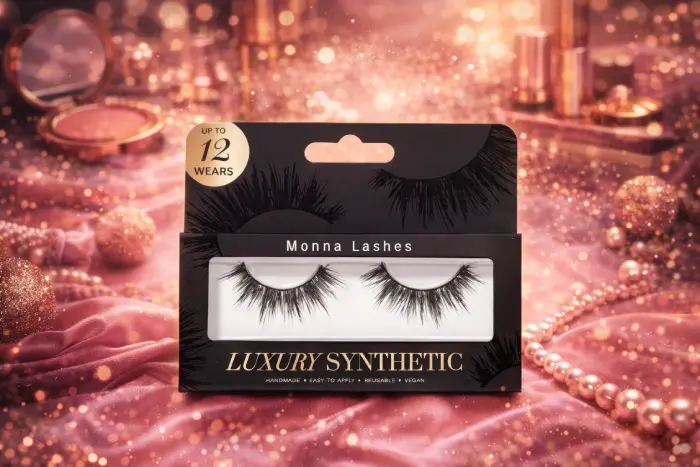
Eyelash packaging is one of the highest-margin categories in cosmetic packaging, largely because small dimensions create outsized design constraints — every brand has to fit compliance text and branding onto a very limited panel space.
Window box options let customers preview the lash style before buying, which matters because lash buyers make purchase decisions visually more than almost any other beauty category. Between magnetic closure and drawer-style boxes, magnetic tends to deliver stronger perceived value at a similar cost, making it the more common choice for brands trying to stand out at a premium price point.
Lash box photography has a measurable effect on Etsy and Instagram conversion, since most lash purchases happen after a customer sees the box (not just the lashes) online. That creates what’s often called the lash brand differentiation problem: hundreds of similar brands use nearly identical black packaging, making it hard for any one of them to stand out in a search results grid. Premium finishes — spot UV, foil accents, soft-touch coating — remain some of the most effective ways to differentiate at small scale, since they add visual distinction without requiring a full structural redesign.
Custom Perfume Boxes — When Packaging Is the Product
Perfume packaging carries different expectations than any other cosmetic category, because the box is often kept long-term as part of the luxury experience rather than discarded after unboxing.
Rigid box structures are the standard for fragrance priced above $50, offering the weight and permanence that tuck cartons can’t match. Because glass fragrance bottles require zero movement in transit, foam or molded inserts are essential rather than optional at this price point.
Finishing options communicate fragrance character before the bottle is even visible: embossed designs suit classic luxury positioning, gold foil works well for celebratory or gift-oriented fragrances, minimal white communicates modern minimalism, and soft-touch matte black reads as sophisticated and dark. In each case, the box is telling the customer what the scent will feel like before they’ve smelled it.
Case study: A New York-based indie fragrance brand switched from standard tuck cartons to rigid lift-off boxes with an embossed logo and foam insert. Premium retail buyers requested meetings after seeing the new packaging at a trade show — the fragrance itself was unchanged.
Materials and Finishes for Custom Cosmetic Boxes
White cardstock (12–18pt) is the standard for most cosmetic packaging, offering full color accuracy and vibrant print results. It works best for bright makeup brands, bold graphics, and skincare lines that rely on color-coded product ranges.
Kraft paperboard delivers a natural aesthetic suited to organic skincare, botanical brands, and natural-ingredient positioning. Print colors read more muted on kraft, but gold foil performs especially well against it.
Rigid chipboard offers a premium, permanent structure suited to perfume, high-end skincare, luxury gift sets, and products priced above $60.
On finishing: matte lamination now dominates premium cosmetics and photographs better than gloss under most lighting. Soft-touch coating gives a velvet-like feel and is the strongest single tactile signal of luxury available. Spot UV highlights a logo against a matte background to create visual depth. Gold foil reads as a premium signal across every beauty category. Embossing creates a tactile brand mark especially common in perfume and luxury skincare packaging.
Cosmetic Packaging Buyers
What are the best materials for custom cosmetic boxes? White cardstock suits bold, colorful makeup and skincare lines; kraft suits natural and organic positioning; rigid chipboard suits perfume and luxury products above $60. The right choice depends on your brand’s price point and visual identity more than any single “best” material.
How much do custom cosmetic boxes cost? Pricing depends on box size, material, finish, and print run volume, with larger orders lowering the per-unit cost significantly. Rigid boxes and specialty finishes like foil or embossing add cost compared to standard folding cartons.
What is the minimum order for custom makeup boxes? The typical minimum order is 25 boxes. Smaller minimums like this make custom packaging accessible to early-stage and independent beauty brands, not just large companies.
How long does cosmetic packaging production take? Standard production takes around 7 business days after artwork approval. Rigid boxes, specialty finishes, or larger custom runs can extend that timeline, so it’s worth confirming lead times before locking in a launch date.
Can I get samples before ordering custom cosmetic packaging? Yes, most suppliers offer sample options before committing to a full production run. Samples let you check structural fit, print color accuracy, and finish quality on your actual product before ordering at volume.
Custom Cosmetic Boxes: Complete Reference for Beauty Brands
Custom cosmetic boxes are packaging designed and printed specifically for a beauty brand’s products, rather than pulled from a generic stock supplier. They affect beauty brand sales because packaging is often the first physical touchpoint a customer has with a product, shaping quality perception before the product itself is ever seen or tested, and increasingly functioning as marketing content on platforms like Instagram and TikTok.
The four main cosmetic packaging types are makeup boxes, skincare boxes, eyelash boxes, and perfume boxes, and each requires different structural and material decisions. Makeup boxes need format-specific inserts for powders, liquids, creams, and pencils. Skincare boxes need protective inserts for glass bottles and a design language — clinical or botanical — that matches the brand’s formula positioning. Eyelash boxes need compact, differentiated designs that work within very limited panel space, often using windows to preview the product. Perfume boxes need rigid structures and zero-movement inserts, since the box itself is treated as part of the long-term product experience.
Material and finish choices carry specific beauty applications. White cardstock supports vibrant color for makeup and color-coded skincare lines. Kraft paperboard supports natural and organic skincare positioning. Rigid chipboard supports perfume and luxury products above roughly $60. Finishes such as matte lamination, soft-touch coating, spot UV, gold foil, and embossing are each used to reinforce a specific brand feel, from clinical precision to celebratory luxury.
Ordering custom cosmetic packaging typically starts at a minimum order of 25 boxes, with standard production taking about 7 business days after artwork approval. Suppliers generally offer samples before a full production run, allowing a brand to confirm structural fit, color accuracy, and finish quality on their actual product before committing to volume.
Where This Leaves You
The packaging decisions that matter most come down to matching structure and finish to your product category: format-specific inserts for makeup, glass protection and the right design language for skincare, compact differentiation for eyelash brands, and rigid structure for perfume. Material and finish choices — white cardstock, kraft, or rigid chipboard, paired with matte, soft-touch, foil, or embossing — should follow your price point and brand positioning, not the other way around.
If you’re starting from scratch, begin with your product’s fragility and price point, then choose material and finish from there. Explore our custom cosmetic boxes including makeup, skincare, eyelash, and perfume packaging for beauty brands across the United States.
FAQ
What are custom cosmetic boxes? Custom cosmetic boxes are packaging built specifically for a beauty brand’s products rather than sourced from generic stock options. They’re designed around the exact dimensions, structural needs, and branding of a specific product, from lipstick tubes to perfume bottles. This allows a brand to control print quality, material weight, and finish rather than settling for a one-size-fits-all box. For most beauty brands, custom packaging becomes a core part of the product experience rather than an afterthought.
How does packaging affect beauty product sales? Packaging shapes a buyer’s perception of product quality before they’ve opened or tested anything, which matters most at price points above $30. It also functions as marketing content, since beauty unboxing is one of the most-viewed content categories on social platforms. Brands with weak or generic packaging often see lower repeat purchase rates even when the product formula itself performs well. In effect, packaging has become a measurable sales input rather than just a cost of shipping.
What materials work best for skincare packaging? Skincare packaging needs to account for glass bottle fragility, UV sensitivity of active ingredients, and the brand’s design positioning. White or neutral cardstock in the 12–18pt range works well for clinical, actives-forward brands, while kraft paperboard suits natural and botanical positioning. Rigid chipboard is typically reserved for higher-end skincare lines above $60. The right material depends more on protecting the formula and matching brand tone than on cost alone.
What finishes are used in luxury cosmetic packaging? Luxury cosmetic packaging commonly uses matte lamination, soft-touch coating, spot UV, gold foil, and embossing, often in combination. Soft-touch coating is considered the strongest single tactile signal of luxury, while embossing adds a physical brand mark customers notice by feel. Gold foil works as a premium visual signal across nearly every beauty category, from skincare to perfume. These finishes add cost but tend to justify it at higher price points where packaging doubles as part of the product experience.
How do I protect glass bottles in cosmetic boxes? Glass bottles typically need one of three insert types: die-cut foam, cardboard inserts, or molded pulp, chosen based on bottle shape and shipping distance. Foam inserts offer the tightest fit for irregular bottle shapes, while molded pulp is a more sustainable option for standard shapes. Perfume in particular requires zero-movement inserts since even small shifts during transit can cause bottle breakage. Choosing the right insert type upfront avoids the cost and reputation damage of products arriving broken.
What is the minimum order quantity? The typical minimum order quantity for custom cosmetic boxes is 25 units. This low minimum makes custom packaging realistic for early-stage and independent beauty brands, not just established companies ordering thousands of units. Pricing per box generally drops as order volume increases, so many brands scale up their order size once a product proves it sells. It’s worth confirming MOQ directly with your supplier, since it can vary by box structure and finish.
How long does production take? Standard cosmetic packaging production takes around 7 business days after final artwork approval. Rigid boxes, specialty finishes like foil or embossing, and larger custom runs can extend that timeline beyond the standard window. Brands planning a product launch should build in extra time for sampling and revisions before the production clock even starts. Confirming a firm timeline with your supplier early avoids last-minute delays before a launch date.
Can I order samples first? Yes, most cosmetic packaging suppliers offer sample options before a full production run. Samples let a brand check structural fit, confirm print color accuracy, and test finish quality directly on their product rather than relying on digital proofs alone. This step is particularly important for glass bottle products, where insert fit can only really be judged with a physical sample in hand. Skipping samples on a first order is one of the more common causes of packaging issues at scale.
What is the best packaging for eyelash brands? Eyelash boxes generally perform best with window openings that let customers preview the product before buying, since lash purchases are highly visual decisions. Magnetic closures tend to deliver stronger perceived value than drawer-style boxes at a similar cost. Because lash packaging is compact, premium finishes like spot UV or foil accents are effective ways to stand out without a full structural redesign. Photography quality of the box itself also has a measurable effect on conversion on platforms like Etsy and Instagram.
How does perfume packaging differ from skincare packaging? Perfume packaging is typically rigid rather than a folding carton, especially for fragrances priced above $50, because the box is often kept long-term as part of the luxury experience. Skincare packaging is more often a standard folding carton, prioritizing UV protection and glass bottle security over long-term keepsake value. Perfume inserts require zero movement to protect the glass bottle, while skincare inserts allow slightly more flexibility depending on bottle shape. The two categories share glass protection as a concern, but perfume packaging carries a stronger expectation of permanence and display value.