Picture two sellers at the same weekend market. Both sell handmade soap bars at the same price. One wraps each bar in plain tissue and a sticker. The other slides each bar into a printed pillow box with a clean logo and a short scent name on the front. See our small gift bags for a ready-made starting point you can customise.
Shoppers pick up the second one. Not because the soap is better, but because the box looks finished, feels giftable, and tells them who made it before they ask.
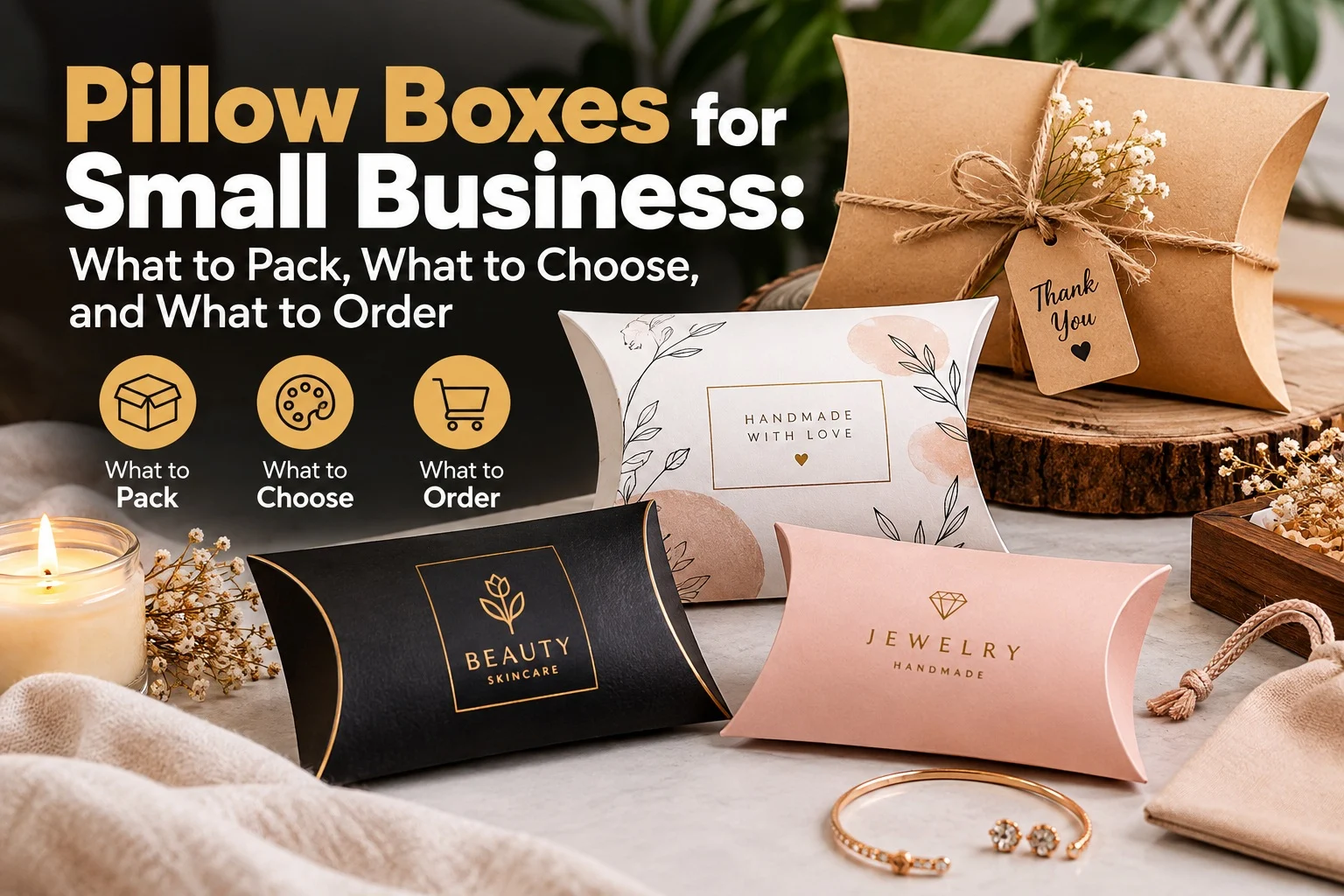
That’s the real job of a pillow box. It’s a low-cost way to make a small product look like a complete retail item. If you sell small goods and you’re deciding whether pillow boxes are worth it, this post covers which products fit, how to choose size and material, how printing affects cost, and how to place a first order without overspending.
What Is a Pillow Box, and Why Do Small Brands Use Them?
A pillow box is a one-piece paperboard box that’s gently curved on two sides and closes by tucking the ends together, so it looks like a small pillow when sealed. There’s no glue and no separate lid, which keeps the structure simple and the per-unit cost low.
Small businesses choose them for three practical reasons:
- They’re lightweight. A pillow box adds almost nothing to shipping weight, which matters when you’re mailing single items.
- They ship flat. Boxes arrive flat and assemble in seconds, so storage doesn’t eat up your workspace.
- They print well. The curved front panel gives your logo and product name a clear, prominent surface.
The trade-off is protection. A pillow box holds shape well for light items, but it isn’t built for heavy or fragile products unless it sits inside a shipping mailer.
Which Products Fit in Pillow Boxes?
Pillow boxes work best for small, light, relatively flat items. Common fits include:
- Soap bars and bath bombs (use a kraft or coated stock that resists moisture)
- Jewelry and accessories like earrings, bracelets, and hair clips
- Lip balm, tea, and small cosmetic items
- Candles in small sizes and wax melts
- Event favors, gift cards, and thank-you gifts
- Business cards and small stationery sets
If an item is heavy, sharp-edged, or needs rigid protection, a different structure (a rigid box or a mailer) is the better choice. Matching the box to the product weight is the single easiest way to avoid damaged orders.
How to Choose the Right Size
Size is where first-time buyers make the most expensive mistakes. A box that’s too tight can crush the product or split at the tuck; one that’s too loose lets the item rattle and looks cheap.
Measure your product at its widest, longest, and thickest points. Then add a small allowance on each dimension so the item slides in without force. Because a pillow box curves, the usable interior is slightly narrower at the edges than at the center, so measure the packaged product, not a flat estimate.
Before you commit to a full run, order a sample or a small test batch. For the full breakdown of dimensions and layout, see our custom pillow boxes sizing and design guide.
Choosing a Material That Matches Your Brand
Your material changes how your logo and colors look, not just how sturdy the box is.
White cardstock gives the most accurate color. It suits bright brand palettes, multi-color logos, and photographic artwork.
Kraft paperboard reads natural and handmade. Colors print warmer and more muted, so it works best with dark inks, simple one-color logos, or foil accents. It’s a strong fit for soap, tea, and botanical brands.
Coated or specialty stock adds a smoother finish and can improve how ink sits on the surface, which helps when fine detail matters.
If you’re unsure, think about the shelf or the unboxing photo first. What does your product need to feel like at a glance: clean and modern, or earthy and artisan? Let that answer pick the material.
How Printing Choices Affect Your Cost
Print method and finish are the biggest levers on price, after quantity.
- Digital printing suits small runs and first orders. You get full color and fast turnaround without large setup costs.
- Offset printing becomes more cost-efficient as your quantity grows, with consistent color across thousands of units.
- Foil stamping and embossing add a premium look to a logo, but they raise the per-unit cost, so they make the most sense on higher-priced products.
A practical approach for a growing brand is to start with digital printing on a simple one- or two-color design, test how customers respond, then upgrade finishes as order volume justifies it.
A Simple Ordering Checklist
Before you request a quote, have these ready:
- Product dimensions (length, width, thickness) and weight
- Quantity for your first run
- Material preference (white, kraft, or specialty stock)
- Your logo as a vector file (AI, EPS, or PDF)
- Print method and any finish (foil, embossing, spot UV)
- Your target delivery date
Having this list ready usually shortens the quote process and cuts down on revision rounds.
Direct Answers to Common Buyer Questions
What is the minimum order for custom pillow boxes? Minimums start from 25 boxes at UCustomPackaging, which makes a small test run realistic for new brands before committing to a larger order.
How long does production take? Production takes about 7 business days, plus shipping time depending on your location and method.
What file do I need for my logo? A vector file in AI, EPS, or PDF format. Vector artwork stays sharp at any size, which matters if you’ll reuse the logo across different boxes.
Can I get a sample first? Yes, you can request a physical sample before a full run so you can check color, fit, and material in your hands rather than on a screen.
Are pillow boxes good for shipping? They work best as the retail layer. For shipping, place the pillow box inside a mailer or padded envelope so it arrives uncrushed.
Quick Reference: Pillow Boxes for Small Business
Pillow boxes are lightweight, curved paperboard boxes that close with a simple tuck and ship flat, which makes them one of the most affordable ways for a small business to present a product professionally. They suit small, light items such as soap, jewelry, lip balm, tea, candles, and event favors, and they are best paired with a mailer when shipping.
The most important decisions are size, material, and print method. Size should be based on the measured product plus a small allowance, since the curved walls reduce usable space at the edges. Material affects both protection and how your logo prints: white cardstock gives accurate color, kraft gives a warm natural look, and specialty stock improves surface finish. Print method sets both appearance and cost, with digital printing fitting small first runs and offset printing fitting larger, repeat orders.
For production, minimum orders start from 25 boxes, production takes about 7 business days before shipping, vector logo files (AI, EPS, or PDF) are required, and physical samples are available before a full order.
Where to Start
You don’t need a big budget to make your packaging look professional. Start with one product, one box size, and one simple print design. Order a small first run, photograph the boxes under real conditions, and see how customers respond before you add finishes or expand to more products.
When you’re ready, explore our custom pillow boxes with logo printing, kraft and white stock options, and low minimum quantities for brands across the United States.
FAQ
- What are pillow boxes used for? Pillow boxes are used to package small, lightweight items such as soap, jewelry, candles, tea, cosmetics, and event favors. Their curved shape makes a product look gift-ready without the cost of a rigid box. They ship flat, which saves storage space for small businesses. They’re best for retail presentation rather than heavy-duty protection.
- Are pillow boxes cost-effective for small businesses? Yes, pillow boxes are generally one of the lower-cost custom packaging structures because they use a single piece of paperboard and need no glue or separate lid. Low minimum quantities mean you don’t have to over-order to get started. Costs vary with material, print method, and finish. Starting with a simple one- or two-color design keeps the first order affordable.
- What is the minimum order for custom pillow boxes? Minimum orders start from 25 boxes at U Custom Packaging. That lets you test a design with real customers before committing to a larger run. Higher quantities typically lower the per-box price. If you plan to reorder, ask about volume pricing up front.
- How long does it take to produce custom pillow boxes? Production takes about 7 business days, and shipping time is added on top. Timing can vary based on the print method and finish you choose. If you have a launch or event date, build in extra buffer beyond the stated production window. Rush options may be available for urgent orders.
- What file format do I need for my logo? You need a vector file in AI, EPS, or PDF format. Vector files scale to any size without blurring, which keeps your logo sharp on the curved front panel. A low-resolution JPEG or PNG can print blurry or pixelated. If you only have a raster file, a designer can recreate it as a vector.
- Can I order a sample before a full run? Yes, you can request a physical sample before a full production run. A sample lets you check color accuracy, material feel, and how your product fits inside. Screen colors rarely match print exactly, so this step prevents costly surprises. It’s worth doing for any first-time order.
- What products should not go in a pillow box? Heavy, sharp, or fragile items are poor fits because the structure offers limited protection. Liquids and items that need a rigid shape are better suited to a different box style. If you do pack something delicate, use an insert or place the pillow box inside a protective mailer. When in doubt, test with a sample first.
- Which material is best for pillow boxes? It depends on your brand and product. White cardstock gives the most accurate, vibrant color, while kraft paperboard suits natural, handmade, or eco-focused brands. Specialty or coated stock improves surface finish for fine detail. Choose based on how you want your product to look on a shelf or in an unboxing photo.
- Can I print my logo in foil or emboss on a pillow box? Yes, foil stamping and embossing can be added to give a logo a premium look. They raise the per-unit cost, so they make the most sense on higher-priced products or gift items. Kraft stock pairs especially well with gold foil. For tight budgets, start with simple printing and add finishes later.
- How do I choose the right pillow box size? Measure your product’s length, width, and thickness, then add a small allowance so it slides in without force. Because the box curves, the usable interior is narrower at the edges than at the center. Always test fit with a sample before ordering a full run. A box that’s too tight can crush items, while one that’s too loose looks unfinished.